Hard water stains can make clean glass look cloudy, dull, and permanently dirty. They are especially common on shower doors, bathroom windows, faucets, and other surfaces that are frequently exposed to water.
Fortunately, many hard water stains can be removed without replacing the glass or buying a long list of specialized cleaning products.
The key is understanding what causes the cloudy buildup and using a cleaner that can break down those mineral deposits without scratching the glass.
What Causes Hard Water Stains on Glass?
Hard water contains dissolved minerals, particularly calcium and magnesium. When water droplets remain on glass and eventually evaporate, some of those minerals can stay behind.
Over time, repeated exposure can create the familiar white, cloudy, or chalky appearance seen on shower doors and other bathroom surfaces.
Hard water itself is common and isn’t necessarily an indication that your water is unsafe. The University of Kentucky notes that calcium and magnesium naturally occur in water and that excessive hardness can leave mineral deposits on surfaces after the water evaporates.
The longer those deposits remain on glass, the more difficult they may become to remove.
How to Remove Hard Water Stains From Glass With Vinegar
White vinegar is one of the simplest household products to try on mineral deposits.
Vinegar contains acetic acid, a mild acid that can help dissolve hard water buildup. New Mexico State University specifically identifies vinegar as useful for removing hard water deposits from glassware.
What You’ll Need
- White vinegar
- Water
- Spray bottle
- Soft microfiber cloth
- Non-abrasive sponge
- Clean towel
Step 1: Make a Vinegar Solution
For routine hard water buildup, combine equal parts white vinegar and water in a clean spray bottle.
If you’re dealing with more stubborn deposits, you can try using white vinegar more directly, provided the surrounding materials can safely tolerate acidic cleaners.
Step 2: Spray the Glass
Apply the vinegar solution generously over the affected glass.
Make sure the cloudy areas are thoroughly covered.
Instead of immediately wiping it away, give the vinegar some time to work on the mineral buildup.
Step 3: Wipe With a Non-Abrasive Sponge
Gently wipe the glass with a soft sponge or microfiber cloth.
Avoid aggressive scrubbing with rough materials. Abrasive cleaners and coarse scouring products can scratch some surfaces.
Step 4: Rinse the Glass
Once the deposits have loosened, rinse the surface thoroughly with clean water.
This removes both the remaining vinegar and loosened mineral residue.
Step 5: Dry the Glass Completely
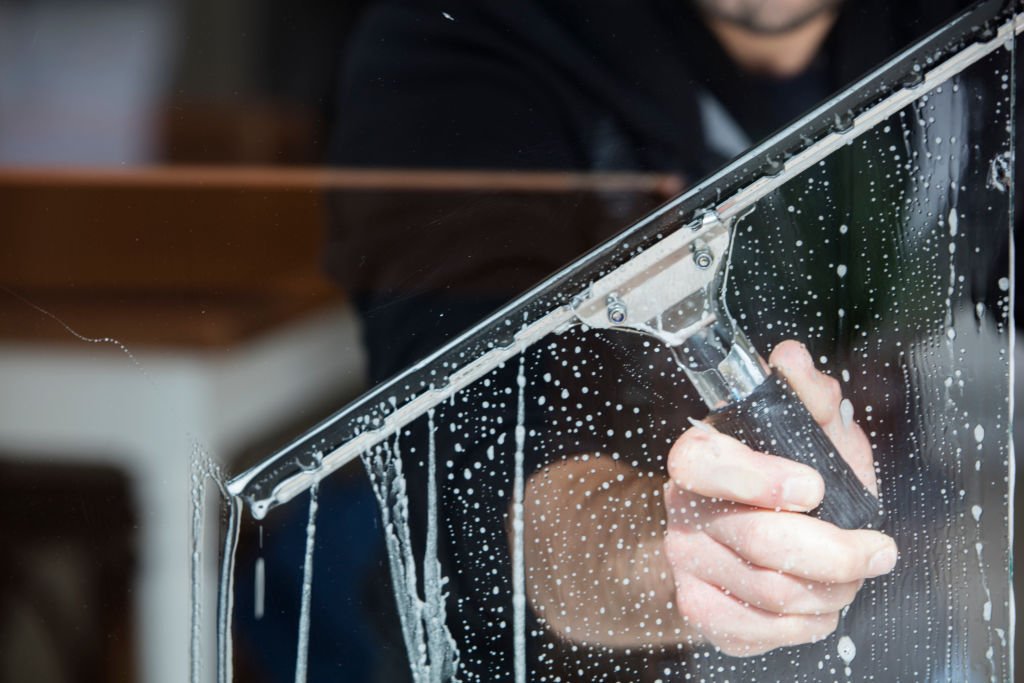
Use a clean microfiber towel or squeegee to remove the remaining water.
Drying is an important part of the process because allowing water to evaporate on the glass can create new mineral spots.
How to Remove Stubborn Hard Water Stains
Older deposits may require more than one cleaning.
Instead of aggressively scrubbing the glass, repeat the vinegar treatment and allow the acidic solution additional contact time.
For a vertical surface such as a shower door, one practical approach is to wet paper towels or a reusable cleaning cloth with vinegar and temporarily place them against heavily affected areas. This can help keep the deposits in contact with the cleaner longer.
Afterward, gently wipe, rinse, and dry the glass.
Always test your cleaning method on a small, inconspicuous area first, particularly when working around specialty glass, coatings, stone, metal, or other materials.
Can Lemon Juice Remove Hard Water Stains?
Lemon juice is another option for light mineral buildup.
It contains citric acid, which can help dissolve mineral deposits.
Cornell Cooperative Extension notes that lemon can help dissolve hard water deposits and soap scum, while New Mexico State University explains that citric acid has many of the same household cleaning applications as vinegar.
For light spots, apply lemon juice to the affected glass, allow it to sit briefly, gently wipe the surface, rinse, and dry.
Vinegar will generally be more practical for cleaning a large shower door, while lemon can be convenient for smaller areas.
What About Baking Soda?
Baking soda is useful for many household cleaning jobs, but hard water deposits are primarily mineral buildup.
Mild acids such as vinegar and citric acid are particularly useful because they can help dissolve these deposits.
If using baking soda on glass, avoid aggressive scrubbing. The goal should be to remove the mineral deposits without creating scratches.
How to Remove Hard Water Stains From Shower Glass
Shower doors are particularly vulnerable because they are exposed to water almost every day.
For shower glass:
- Spray the affected areas with a vinegar-and-water solution.
- Allow the solution time to loosen the mineral deposits.
- Wipe gently with a non-abrasive cloth or sponge.
- Rinse thoroughly.
- Use a squeegee to remove the water.
- Finish with a dry microfiber cloth.
If the shower glass also contains soap scum, you may need to repeat the process.
How to Prevent Hard Water Stains on Glass
Removing existing stains is useful, but preventing new buildup can save considerably more cleaning time.
Use a Squeegee After Showering
Running a squeegee over shower glass takes only a few seconds.
Removing droplets before they evaporate reduces the opportunity for minerals to remain behind.
Dry Wet Glass
A microfiber cloth can be used to quickly dry areas where water regularly accumulates.
Clean Before Heavy Buildup Develops
Light mineral deposits are generally easier to address than months of accumulated residue.
Regular maintenance can therefore make cleaning much easier.
Improve Bathroom Ventilation
Ventilation helps moisture leave the bathroom faster.
Use an exhaust fan when available and allow wet surfaces to dry after showering.
Consider Your Home’s Water Hardness
If mineral deposits repeatedly appear throughout your home, hard water may be contributing to the problem.
Water softeners can remove minerals responsible for hard water, although the U.S. Environmental Protection Agency notes that traditional cation-exchange water softeners can consume water and salt during treatment. Homeowners considering one should therefore also consider its water and salt efficiency.
What Should You Avoid When Cleaning Glass?
When cleaning hard water stains, more force is not necessarily better.
Avoid using extremely abrasive materials that could scratch the glass. University of Georgia Cooperative Extension notes that coarse abrasives can require less scrubbing but may scratch surfaces.
You should also be careful when combining household cleaners.
Never assume two cleaning products are safe to mix simply because each one is commonly used on its own. Follow the manufacturer’s directions for commercial cleaning products.
If your shower includes natural stone or another acid-sensitive material around the glass, protect those surfaces and check their care instructions before using vinegar or lemon juice nearby.
Why Do Hard Water Stains Keep Coming Back?
If the stains return quickly, the problem may not be your cleaning technique.
Water droplets are repeatedly landing on the same surface and evaporating, leaving new minerals behind.
That is why prevention can be more effective than constantly deep-cleaning the glass.
A simple routine of squeegeeing and drying shower doors can significantly reduce visible buildup.
Frequently Asked Questions
Does vinegar really remove hard water stains from glass?
Vinegar can help dissolve mineral deposits because it contains acetic acid. University extension resources specifically recommend vinegar for hard water deposits on glass and glassware.
Can hard water permanently damage glass?
Long-term mineral buildup can become increasingly difficult to remove, and glass may eventually develop etching or other surface changes. Addressing deposits regularly is preferable to allowing heavy buildup to remain indefinitely.
What is the easiest way to prevent hard water stains on shower doors?
Removing water before it dries is one of the simplest strategies. Use a squeegee after showering and dry remaining droplets with a microfiber cloth.
Can I use lemon instead of vinegar?
For lighter mineral deposits, lemon juice can be useful because its citric acid can help dissolve mineral buildup.
How often should shower glass be cleaned?
There is no universal schedule because water hardness and shower use vary. A quick squeegee after showers combined with regular cleaning before visible buildup becomes heavy is a practical approach.
Final Thoughts
Hard water stains don’t have to become a permanent feature of your shower doors or windows.
White vinegar, water, a soft cloth, and a little patience can often remove ordinary mineral buildup. For lighter stains, lemon juice is another simple option.
The most effective long-term strategy, however, is prevention. Removing water from glass before it evaporates can dramatically reduce the mineral deposits that create those cloudy stains in the first place.
References
University of Kentucky — Common Drinking Water Quality Issues
https://env.uky.edu/drinking-water/common-drinking-water-quality-issues
New Mexico State University — Selection and Use of Home Cleaning Products
https://pubs.nmsu.edu/_g/G304/
Cornell Cooperative Extension — Cleaning Products You Can Make at Home
https://albany.cce.cornell.edu/resources/cleaning-products-you-can-make-at-home
U.S. Environmental Protection Agency — Water-Efficient Products and Water Softeners
https://www.epa.gov/watersense/other-water-efficient-products